
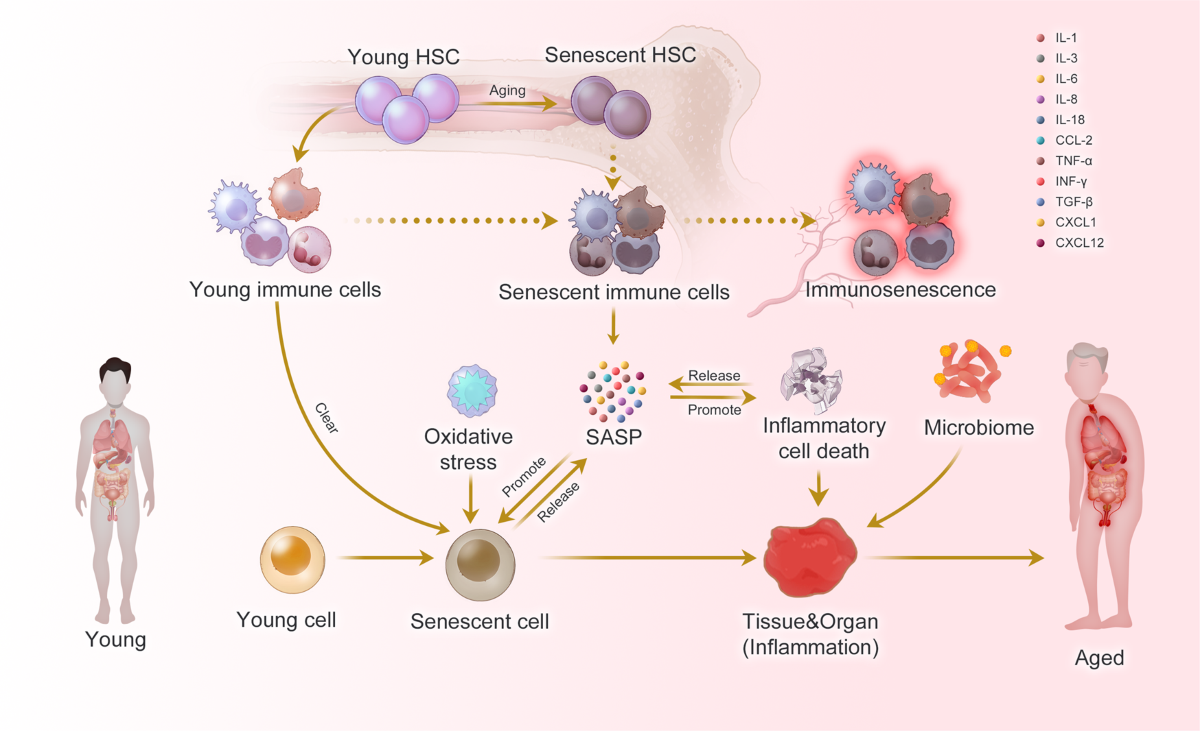
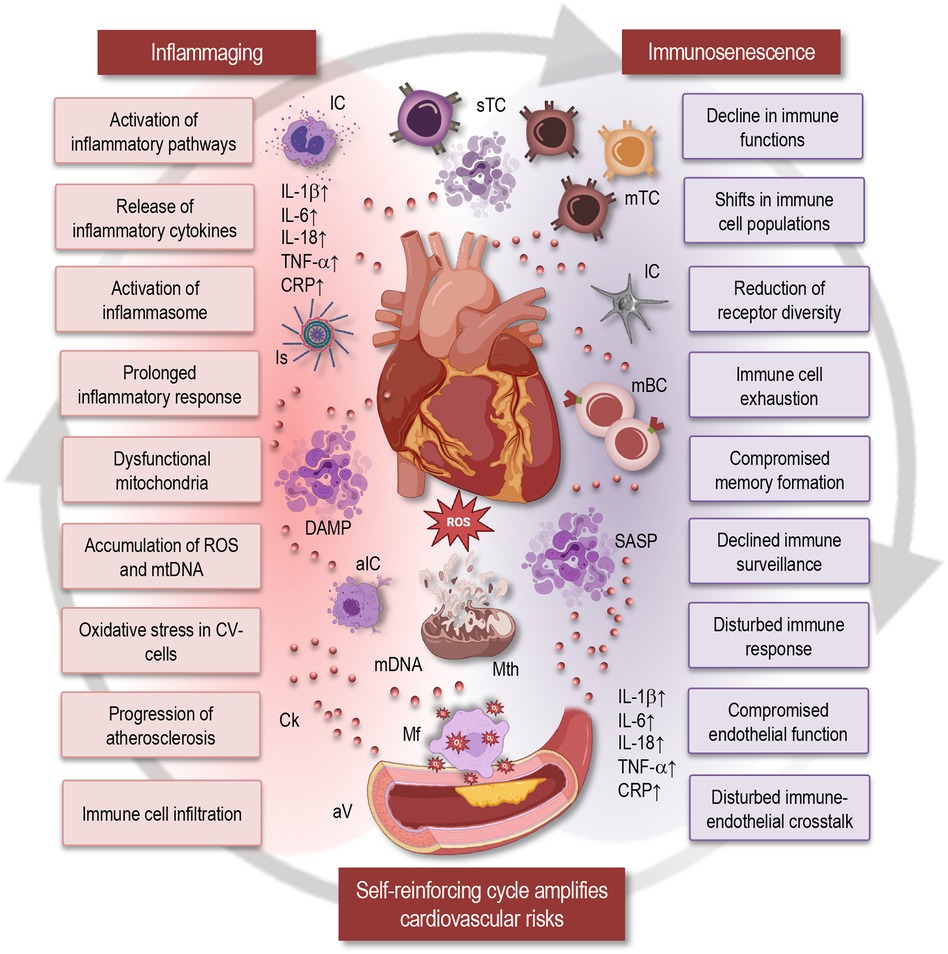
Aging isn’t simply the passage of time. It’s the gradual loss of cellular coordination — the breakdown of the body’s ability to regulate itself at the molecular level. The once-coordinated signaling between cells becomes discordant. This loss of harmony is driven in large part by inflammaging: a chronic, low-grade inflammatory state that underlies nearly every age-related disease.
From cardiovascular disease and Alzheimer’s to diabetes and cancer, inflammation isn’t just a symptom — it’s a driver. Many people still treat it as background noise in the longevity conversation.
Regenerative therapies such as exosome-based preparations have entered this discussion, with early-stage research exploring a role in modulating inflammation — particularly within the vascular endothelium, a central site of age-related inflammatory signaling. As interest accelerates, so do concerns about safety, consistency, and validation in the current marketplace.
What Is Inflammaging?
Coined from “inflammation” and “aging,” inflammaging refers to chronic activation of the immune system over time. Unlike acute inflammation, which protects and heals, chronic inflammation accumulates silently — damaging tissues, accelerating cellular senescence, and disrupting signaling pathways that regulate immune, metabolic, and repair functions.
See: inflammaging pathways (Nature).
The Conductor Analogy
Imagine the body as a symphony orchestra:
- The genes are the sheet music.
- The immune system is the brass section.
- Metabolic systems are strings and percussion.
- The conductor is the regulatory network keeping everything in rhythm.
As we age, the conductor falters. Regulatory decline produces discord across multiple systems. Disease emerges not because of time alone, but because regulatory failure allows dysfunction to compound.
See: inflammaging and immunoscience (Frontiers).
The Promise and Uncertainty of Exosome Preparations
One emerging area: the hypothesis that extracellular vesicles — including exosomes derived from perinatal stem cells — may help regulate inflammation through paracrine signaling, particularly at sites of endothelial dysfunction where chronic inflammation contributes to vascular aging, insulin resistance, and atherosclerosis.
The market reality is more complicated than the concept.
Quality and content of exosome preparations vary widely. Even when derived from similar source tissues (such as human umbilical cord MSCs), the final product depends on:
- Culture conditions
- Passage number
- Harvesting and purification methods
- Storage protocols
- Sterility and contaminant screening
- Batch consistency
Despite what may be on a label or claimed by a researcher or provider, most recipients — even physicians — have no way of knowing what’s actually in the vials, especially from grey-market sources. In many cases, the labs themselves may not fully know either, particularly when preparations lack independent testing, identity verification, or third-party batch traceability. Lyophilized (powdered) preparations denature proteins and result in sub-par or dangerous formulations.
Robust research labs ship sterile liquid shelf-stable products and engage in:
- Flow cytometry for vesicle profiling
- Endotoxin and sterility testing
- Nanoparticle tracking analysis (NTA)
- Cytokine cargo profiling
Many marketed products — especially in unregulated jurisdictions — don’t undergo this level of scrutiny. Even well-meaning practitioners may not understand the formulations entering the grey market. Some may contain cellular debris, pro-inflammatory contents, non-human contaminants, or mislabeled sources.
Risk Factors, Testing, and Clinical Caution
There’s no universal screening standard to determine whether a recipient is a good candidate for research studies involving biologic products. The patient’s internal terrain matters.
Factors to consider:
- Personal or family history of cancer
- Pre-existing inflammatory or autoimmune conditions
- Latent infections
- Age, immune status, vascular health
Tests like GRAIL or other multi-cancer early detection panels may help stratify risk before any systemic biologic is administered. Localized applications, where feasible, reduce systemic exposure and mitigate unintended immune responses. Read more about risk factors and suitability here.
Why a Holistic View Matters
Even if biologics like exosomes prove beneficial, they won’t stand alone. Inflammaging is systemic; treating it requires systemic, multi-pronged thinking.
Single agents — peptides, advanced biologics — may play a role. Longevity science is moving toward systems-level regulation, not isolated suppression. Stress, glycemic control, circadian rhythm, and senescence management all contribute to the terrain in which inflammation and regeneration occur.
The Bottom Line
Exosome research may offer a promising avenue against inflammaging, but in a largely unregulated global market, caution and discernment aren’t optional. Without standardized validation, batch-level testing, and clinician oversight, biologics supposedly sourced from the same tissue type may yield wildly different effects.
In longevity science, the terrain matters as much as the tool. Regulation — not just of molecules but of systems — is the future.